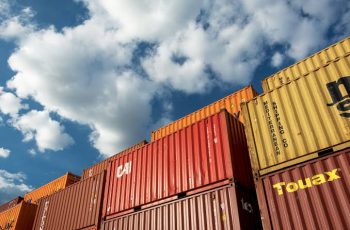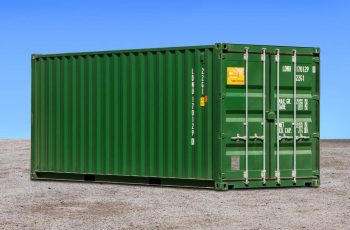
The dimensions of shipping containers vary more than most people realize, and choosing the wrong size can mean wasted space or overspending on a unit that’s too large. The most common shipping container sizes are 20 feet or 40 feet long, 8 feet wide, and 8.5 feet or 9.5 feet tall, though lengths can range from 10 ft to 53 ft. Specifically, the 20ft container is the industry standard. This guide breaks down standard shipping container dimensions, including 20ft shipping container dimensions and 40 ft shipping container dimensions, along with weight specifications, internal measurements, and specialized container types to help readers select the right option accordingly.
Standard Shipping Container Dimensions
Four primary sizes dominate the shipping container market, each serving distinct storage and transportation needs. Understanding the exact measurements helps prevent cargo planning errors and ensures proper space utilization.
20ft shipping container dimensions
A 20ft shipping container measures 6,058 mm (19′ 10.5″) in length, 2,438 mm (8′) in width, and 2,591 mm (8′ 6″) in height on the exterior. Internal dimensions are slightly smaller at 5,900 mm length, 2,352 mm width, and 2,395 mm height. The door opening spans 2,340 mm wide by 2,292 mm high.
Weight specifications include a tare weight of 2,350 kg, maximum payload of 28,130 kg, and maximum gross weight of 30,480 kg. The container provides 33.2 cubic meters of storage capacity. This size offers 150 square feet of floor space and accommodates 10 standard American pallets or 11 Euro pallets in a single base layer.
40ft shipping container dimensions
The 40ft container doubles the length while maintaining identical width and height to the 20ft unit. External measurements are 12,192 mm long, 2,438 mm wide, and 2,591 mm high. Interior dimensions measure 12,032 mm in length, 2,352 mm in width, and 2,395 mm in height.
Door openings remain consistent at 2,340 mm wide by 2,292 mm tall. The tare weight increases to 3,750 kg with a maximum payload capacity of 28,750 kg and maximum gross weight of 32,500 kg. Storage volume reaches 67.7 cubic meters, providing 300 square feet of usable floor area.
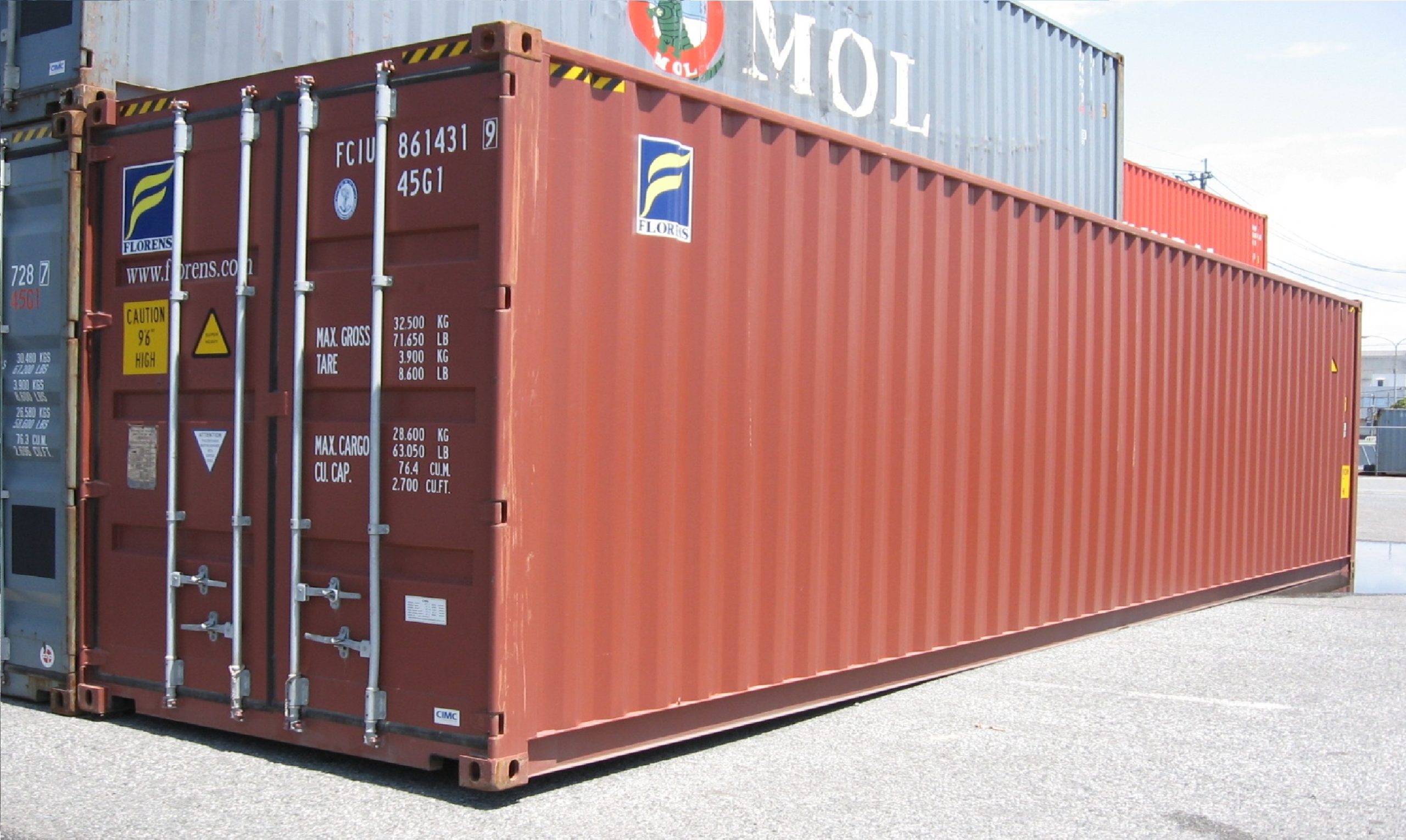
40ft high cube shipping container dimensions
High cube variants add extra vertical space without changing the footprint. A 40ft high cube container measures 12,192 mm long, 2,438 mm wide, and 2,896 mm high externally. Internal height increases to 2,700 mm compared to standard containers, while length and width remain at 12,032 mm and 2,350 mm respectively.
The door opening accommodates taller cargo at 2,340 mm wide by 2,597 mm high. This variant weighs 3,900 kg empty, carries a maximum payload of 28,600 kg, and has a maximum gross weight of 32,500 kg. Cubic capacity expands to 76.3 cubic meters, representing a 12.7% volume increase over standard 40ft units.
10ft shipping container dimensions
Compact 10ft containers serve applications requiring smaller footprints. External dimensions are 2,991 mm long, 2,438 mm wide, and 2,591 mm tall. Interior space measures 2,831 mm in length, 2,350 mm in width, and 2,390 mm in height.
These units weigh 1,300 kg empty and support a payload of 8,860 kg, with a maximum gross weight of 10,160 kg. The reduced size yields 75 square feet of floor space. Door openings measure 7′ 8″ wide by 7′ 5″ tall, similar proportionally to larger containers.
All standard shipping containers maintain the 8-foot width specification across sizes, ensuring compatibility with existing transport infrastructure and handling equipment. Height variations occur only between standard and high cube models, while length determines the primary size classification.
Understanding Container Height: Standard vs High Cube
Height variations between container types affect storage capacity and cargo compatibility more than width or length differences. The two primary height classifications serve distinct purposes in shipping and storage applications.
What is a general purpose container
General purpose containers represent the most common shipping container type globally, with approximately 90% of goods transported by maritime using this standard design. The external height measures 8’6″ or 2.59m, while internal height sits at roughly 2.39m. These containers come in aluminum or steel construction and ship dry cargo exclusively.
The design features solid walls, a rigid roof, and double doors at one end. Standard sizes include 20-foot and 40-foot lengths, with the 20-foot version handling heavier goods and the 40-foot option prioritizing volume over weight. Both work with standard pallet configurations. A 20-foot general purpose container holds 16 pallets stacked two high, whereas a 40-foot unit accommodates approximately double that capacity depending on load arrangement.
Height remains consistent across all lengths within the general purpose category. A 10ft general purpose container stands at the same height as both 20ft and 40ft general purpose variants.
What is a high cube container
High cube containers add one foot of vertical space compared to standard units. External height reaches 9’6″ or 2.89m, with internal height at approximately 2.69m. This extra 30 cm provides 10-15% more cubic capacity[36]. Specifically, a 40-foot high cube offers 2,694 cubic feet versus 2,350 cubic feet in a standard 40-foot container, creating an additional 344 cubic feet of storage space.
High cubes were originally introduced for furniture storage and transport, but applications have expanded across industries. The increased volume proves particularly valuable for lightweight, bulky cargo that fills space before reaching weight limits. Common cargo includes furniture, home appliances, industrial machinery, oversized equipment, bulk textiles, and garments.
By the end of 2013, high-cube 40 ft containers represented almost 50% of the world’s maritime container fleet. The market has shifted toward using 40-foot high-cube dry and refrigerated containers more predominantly in the 21st century.
Visual identification distinguishes high cubes from standard containers. Black and yellow tape appears next to the corner castings on high cube units. The door height also differs by one foot, providing 2,597 mm of vertical clearance versus 2,292 mm in standard containers.
High cube containers weigh 775 pounds more than standard containers due to the additional material. A 40ft high cube weighs 8,775 lbs compared to 8,000 lbs for a standard 40ft unit. However, both maintain the same maximum gross weight of 67,200 lbs.
When to choose high cube over standard
Cargo height dictates the primary decision factor. High cube containers suit items exceeding 7 feet 10 inches that won’t fit in standard units. The extra vertical space accommodates taller equipment, stacked pallets, manufacturing equipment, and retail displays without modification.
Forklift operations benefit from the additional foot of clearance. The extra vertical room allows equipment to move goods more efficiently, saving time during loading and unloading. Industries transporting cargo requiring forklift access find this advantage significant.
Modification projects favor high cube dimensions. Container offices, workshops, pop-up spaces, and residential conversions gain more room for insulation, lighting, HVAC systems, and interior finishes. The added headroom makes spaces feel less cramped when people spend time inside the container.
Volume optimization matters for lightweight cargo. If shipment volume sits between 70 and 75 cubic meters while staying under 28 tons, high cube containers reduce cost per cubic meter. The 10% volume increase allows consolidating more cargo into a single shipment, potentially eliminating the need for a second container.
Standard containers remain the cost-effective choice for dense cargo where height doesn’t matter. Tools, materials, metal products, and construction supplies often prioritize floor loading and weight distribution over vertical clearance. Standard units are also more readily available in most locations.
Container Weight Specifications
Three distinct weight measurements determine what can be safely loaded into a shipping container and how it can be transported. These specifications appear painted on the container doors and govern loading decisions, freight costs, and regulatory compliance.
Tare weight explained
Tare weight represents the empty container’s weight without any cargo inside. This measurement includes all structural components: steel walls, plywood flooring, doors, and any built-in equipment. Container manufacturers set this value and stamp it on the CSC plate affixed to each unit.
The figure serves as the starting point for every payload calculation. Knowing the tare weight helps shippers determine actual product weight, calculate freight quotes accurately, and satisfy customs documentation requirements. For instance, a standard 20-foot container has a tare weight of approximately 2,280 kg (5,030 lbs), while a 40-foot version weighs around 3,700 kg (8,157 lbs).
Tare weights vary by manufacturer and container age. Some manufacturers exceed minimum ISO strength requirements by adding extra materials, resulting in containers that weigh hundreds or thousands of pounds more than standard specifications. A 20ft standard container typically ranges from 2,050 to 2,200 kg, while 40ft standard units weigh between 3,750 and 3,900 kg. High cube containers weigh slightly more due to additional steel in taller sidewalls, with 40ft high cube units at approximately 3,890 to 4,670 kg.
Payload capacity
Payload capacity, also called net weight or maximum load capacity, indicates the maximum cargo weight a container can safely carry. This number answers the practical question of how much can be loaded inside. The calculation subtracts tare weight from maximum gross weight.
A 20-foot container offers higher payload capacity relative to its size compared to 40-foot units. Both share the same 67,200 lb maximum gross weight rating, giving the shorter container a better payload-to-size ratio.
Road transport limits reduce practical payload significantly below ISO ratings. U.S. federal regulations cap gross vehicle weight at 80,000 lbs for standard 5-axle configurations. The combined weight of truck, chassis, empty container, and cargo must stay within this limit, restricting practical cargo weight to approximately 44,000 to 48,000 lbs for 40ft containers. For 20ft units, practical road payload drops to around 37,500 lbs before requiring heavy haul permits.
Maximum gross weight (MGW)
Maximum gross weight represents the absolute highest weight a loaded container can reach. This figure combines tare weight plus maximum allowable payload. For most standard containers, MGW reaches 30,480 kg regardless of length.
International bodies and freight regulators establish these limits according to ISO 668 and CSC standards. Exceeding MGW violates regulations and creates safety risks including container failure, transport vehicle damage, and shipping delays. Customs authorities verify gross weight against documentation to ensure import/export compliance.
Gross weight differs from maximum gross weight in that MGW sets the ceiling while actual gross weight reflects current load. Shippers calculate gross weight by adding net cargo weight to tare weight. Proper weight distribution across the container floor proves equally critical, as concentrated loads can damage flooring even when total weight stays within limits.
Internal vs External Measurements
Wall thickness and structural components create a gap between advertised container sizes and actual usable space. Buyers who confuse external and internal measurements often find 5 to 10 percent of expected capacity unusable.
Why internal dimensions differ
Several structural elements reduce interior space from the advertised footprint. Wall thickness, corner posts, door gear, and floor build-up all consume space. On a standard 20ft container, external length reaches 6096mm but internal length measures only 5900mm, losing nearly 200mm.
The walls themselves consist of 14-gage corrugated steel sheets with 0.075-inch thickness, while framing uses 7-gage tubular steel at 0.187-inch thickness. Floor structure adds 6-inch steel cross members beneath 1⅛-inch marine plywood flooring. These materials combine to reduce both width and height from exterior specifications.
Width shrinks less dramatically than length. Internal width measures approximately 2.35 meters (7 feet 8 inches) against an external width of 2.44 meters (8 feet). The difference stems from wall thickness on both sides. Height reduction proves more substantial, particularly when accounting for the door frame.
Nominal size always references external length. A container labeled as 20ft shows an internal length of 19ft 4in (5900mm), while a 40ft unit provides 39ft 5in (12014mm) internally. Use internal dimensions when planning racking, lining, or conversions.
Door opening dimensions
The door aperture creates the actual loading constraint, not the interior space behind it. A standard container’s opening measures 2.340m wide by 2.280m high, while the interior behind it spans 2.352m wide and 2.393m tall. The opening sits narrower and shorter than the space it serves.
Height presents the primary restriction. Interior width of 2.352m versus door width of 2.340m loses only 12mm. Interior height of 2.393m against door height of 2.280m sacrifices 113mm. Loads get caught on height far more frequently than width. A crate standing comfortably inside the box can still measure 10cm too tall for the frame.
High cubes raise door height to 2.340 × 2.585m. The extra 30cm of aperture often drives the decision to specify a high cube for machinery and racked cargo. Width remains 2.340m across both standard and high cube variants.
The top rail of the frame catches forklift masts and tall crates first. Always plan loading against door figures rather than internal measurements. Almost nothing common fails the standard door, but tall machinery, agricultural equipment, and crated industrial loads over 2.28m require open top or flat rack alternatives.
Square footage and cubic capacity
Floor area calculations help planners understand storage potential without memorizing every measurement. A 10-foot container provides 75 square feet of interior floor space. A 20-foot container offers 150 square feet internally. Both 40-foot standard and high cube variants deliver 300 square feet, as floor dimensions remain identical.
Cubic capacity differs substantially between exterior and interior volumes. A 10-foot container measures 680 cubic feet externally but only 560 cubic feet internally. A 20-foot container drops from 1,360 cubic feet outside to 1,172 cubic feet inside. The 40-foot standard container falls from 2,720 cubic feet to 2,350 cubic feet internally.
High cube units gain volume through height alone. A 40-foot high cube reaches 3,040 cubic feet externally and 2,694 cubic feet internally, representing an 8.7m³ volume gain over standard 40ft footprints. Actual usable cargo volume typically reaches 85 to 90 percent of cubic capacity on account of packing inefficiencies.
Specialized Container Types and Dimensions
Beyond standard dry cargo units, specialized containers address specific transportation and storage challenges that general purpose containers cannot handle. These variants modify dimensions, add equipment, or alter access points to accommodate particular cargo types.
Refrigerated container sizes
Refrigerated containers, commonly called reefers, transport temperature-sensitive goods requiring controlled conditions. Products such as fruit, vegetables, dairy products, and meat rely on these units. Standard reefer sizes include 20ft, 40ft, 40ft high cube, and 45ft lengths.
A 20ft reefer container measures 5.44m internal length, 2.29m width, and 2.27m height, providing 28.3m³ cubic capacity. The tare weight sits at 3,080 kg with a payload capacity of 27,400 kg. Door openings span 2.23m wide by 2.10m high.
The 40ft high cube reefer proves most common in shipping operations. Internal dimensions reach 11.58m length, 2.29m width, and 2.40m height, delivering 67.3m³ storage volume. This variant weighs 4,480 kg empty and carries up to 29,520 kg of cargo. Door clearance measures 2.29m wide by 2.57m tall.
Regional variants exist outside ISO standards. The 48ft refrigerated container represents the largest available option, measuring 14,130mm internal length and providing storage for large-scale temperature-controlled transport.
Side opening containers
Side opening containers feature double doors along one entire side rather than just the end. This configuration proves advantageous where traditional end-door access creates loading difficulties.
The 20ft side opening unit measures 5.898m internal length, 2.34m width, and 2.38m height, offering 33.29m³ capacity. Tare weight reaches 2,940 kg with maximum cargo weight of 21,060 kg. Side door dimensions match internal measurements at 2.34m wide by 2.38m tall.
For larger applications, the 40ft variant spans 11.874m internally with identical width and height to the 20ft model. Cubic capacity doubles to 70.09m³. These containers suit trade shows, where opening an entire side creates display and storage space simultaneously.
Pallet wide containers
Pallet wide containers feature internal width approximately 4 inches (10.2cm) wider than standard units to accommodate Euro pallets efficiently. The design fits pallets precisely, eliminating cargo movement and damage during transit.
A 40ft pallet wide container holds 30 Euro-pallets in one tier compared to 25 in standard 40ft units. Internal dimensions measure 12.03m length, 2.44m width, and 2.38m height. External measurements match standard containers at 12.19m long, maintaining compatibility with existing transport infrastructure.
The 45ft high cube pallet wide variant represents the largest unit available, storing up to 33 Euro pallets. Internal capacity reaches 89.3m³ with dimensions of 13.555mm length, 2.444mm width, and 2.695mm height. Tare weight sits at 4,450 kg with payload capacity of 29,550 kg.
Modified container options
Container modifications adapt standard units for specialized uses including offices, workshops, pop-up retail spaces, and storage facilities requiring custom features. Modifications range from adding windows, doors, and ventilation to installing electrical systems, insulation, and interior finishes.
How to Choose the Right Container Size
Selecting the appropriate container size requires balancing cargo characteristics, transportation logistics, and financial constraints. Three factors determine the optimal choice.
Assessing your storage needs
Cargo type drives container selection. The 20ft container suits heavy, dense items such as machinery, metals, paper products, and bagged agricultural goods. Its lower volume prevents paying for unused space while maximizing payload. By comparison, the 40ft container handles light to moderately heavy items in bulk, including furniture, clothing, electronics, and home goods. Volume concerns outweigh weight considerations for these shipments.
High cube containers provide extra vertical space for voluminous cargo like raw cotton, mattresses, items on high pallets, and lightweight but bulky products. Calculate total cargo volume and weight before selecting dimensions. Measure your items and account for how they pack and load. Heavy machinery requires larger containers, while lighter equipment fits smaller units.
Transportation considerations
Transportation logistics affect both feasibility and cost. Containers longer than 40ft or taller than 8’6″ require special trucking. Distance impacts expenses, with shorter routes proving simpler and cheaper. Longer hauls demand more planning, equipment, and vehicles, increasing costs. Road restrictions in some areas limit transportable sizes.
Delivery versus pickup affects total expenses. Self-pickup requires truck rental, adding costs that may exceed delivery fees. Multiple containers shipped together split transportation costs, making multi-unit orders more economical. Specialized containers like refrigerated units cost more to transport due to securing requirements and specialized equipment.
Budget and availability factors
Container size directly influences pricing. The 40ft option offers economy of scale, while 20ft units cost less upfront and suit businesses with space and budget limitations. Location affects container prices based on proximity to ports and distribution hubs.
Final Thoughts
Choosing the right shipping container dimensions prevents costly mistakes and maximizes cargo efficiency. This guide covered standard sizes from 10ft to 40ft units, height variations between standard and high cube models, weight specifications, and the critical differences between internal and external measurements. Understanding these specifications helps businesses select containers that match their cargo requirements without paying for unnecessary space or capacity.
Specialized containers address unique transportation needs, while proper size selection balances storage requirements against transportation logistics and budget constraints. Armed with these measurements and guidelines, readers can confidently evaluate options and choose containers that deliver the best value for their specific applications.