Understanding how much a shipping container weighs is critical for anyone planning to transport, place, or modify these steel structures. Get the weight wrong, and container buyers could face costly transportation fees, foundation failures, or regulatory violations. The numbers vary significantly depending on container size and type. For instance, an empty 20-foot shipping container weighs between 1.8-2.2 metric tons (about 3,970-4,850 lbs), while a 40-foot container tips the scales at 3.8-4.2 tons (8,340-9,260 lbs). High cube containers tend to be heavier.
This guide breaks down exactly how much does a 20ft shipping container weigh, how much does a 40-foot shipping container weigh, how much does a 10 foot shipping container weigh, and how heavy is a shipping container across all standard sizes. Readers will learn weight terminology, regulatory limits, and factors that affect container weight.
Understanding Shipping Container Weight Terminology
Three distinct weight specifications define every shipping container. Each measurement serves a specific purpose in transport planning, regulatory compliance, and safe handling operations.
Tare Weight (Empty Container Weight)
Tare weight represents the weight of an empty container with no cargo inside. This figure appears stamped on the CSC plate and varies by manufacturer and container condition. A standard 20-foot container carries a tare weight of approximately 2,300 kg (5,070 lbs), while a 40-foot standard unit weighs approximately 3,750 kg (8,265 lbs) empty. The exact tare weight of a specific container appears on its data plate on the door end.
Tare weight determines how much cargo can be safely loaded without exceeding maximum gross weight. Freight companies use this figure to calculate accurate shipping costs and avoid unexpected charges. Because customs officials require tare weight for documentation verification, having this number readily available streamlines import/export procedures.
Maximum Gross Weight
Maximum gross weight defines the absolute maximum the container can carry, including both tare weight and cargo. ISO standards set this rating for structural integrity. Most standard containers have a maximum gross weight of 30,480 kg (67,200 lbs). This total weight figure applies to road transport and foundation load calculations.
Road transport faces legal weight limits. Exceeding maximum gross weight results in fines or shipment delays. The International Maritime Organization implemented Verified Gross Mass (VGM) requirements in 2016 because misdeclared and overweight containers cause numerous accidents annually.
Payload Capacity
Payload capacity equals the difference between maximum gross weight and tare weight. In other words, payload answers how much cargo can fit inside the container. A 20-foot container typically handles approximately 28,300 kg (62,390 lbs) of payload, while a 40-foot standard container accommodates up to 26,860 kg (59,220 lbs).
Calculating payload requires adding tare weight to cargo weight to determine total gross weight. For storage applications, payload represents the relevant figure. For transport operations, gross weight determines road legality.
Where to Find Weight Information on Your Container
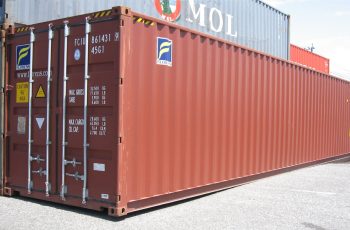
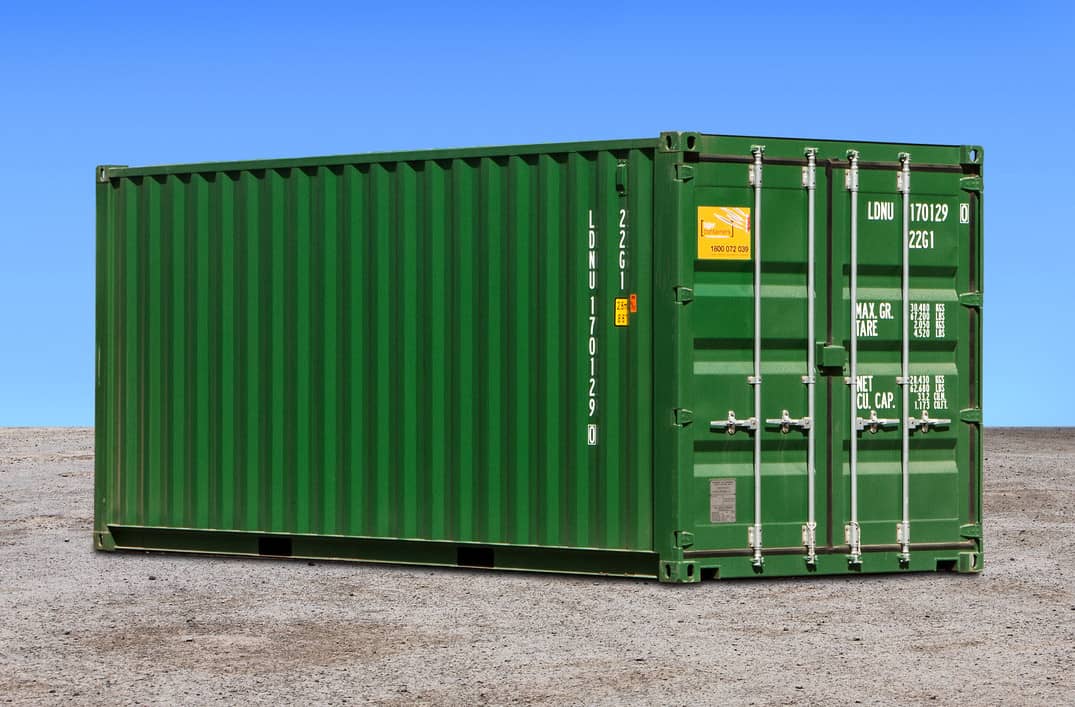
Every ISO shipping container carries a CSC (Convention for Safe Containers) plate riveted to the left door. The plate lists maximum gross weight in kilograms and pounds, tare weight, allowable stacking weight, racking test load value, and date of manufacture. This data appears in bold lettering on the outside of the cargo doors.
How Much Does a Shipping Container Weigh by Size
Container dimensions directly determine weight specifications. Each standard size carries distinct tare, gross, and payload ratings that affect transport costs and handling requirements.
How Much Does a 10 Foot Shipping Container Weigh
A 10-foot container weighs approximately 2,645 lbs (1,200 kg) empty. The maximum gross weight reaches 22,400 lbs (10,160 kg), providing a payload capacity of roughly 19,755 lbs (8,960 kg). Some variations show tare weights around 2,850 lbs, depending on manufacturer specifications and construction methods.
How Much Does a 20ft Shipping Container Weigh
Standard 20-foot units carry a tare weight of approximately 5,070 lbs (2,300 kg). Maximum gross weight stands at 67,200 lbs (30,480 kg), yielding a payload capacity of about 62,170 lbs (28,230 kg). Weight variations between 4,520-5,070 lbs reflect differences in manufacturing and materials.
How Much Does a 40-Foot Shipping Container Weigh
Empty 40-foot containers weigh approximately 8,265 lbs (3,750 kg). Identically to 20-foot units, the maximum gross weight reaches 67,200 lbs (30,480 kg), creating a payload capacity of roughly 58,935 lbs (26,730 kg). Standard tare weights range from 8,265-8,554 lbs depending on container age.
40ft High Cube Container Weight
High cube containers add one foot of height, increasing empty weight to approximately 8,750 lbs (3,970 kg). The maximum gross weight remains 67,200 lbs, with payload capacity around 58,450 lbs (26,510 kg). Some manufacturers report tare weights of 8,675 lbs or 8,747 lbs.
Other Container Sizes and Weights
A 45-foot high cube container weighs approximately 10,552 lbs (4,800 kg) empty, with payload capacity reaching 61,067 lbs (27,700 kg). Specialized containers like refrigerated units carry additional equipment weight, while flat rack containers can weigh up to 6,250 kg empty.
Factors That Affect Shipping Container Weight
Several variables cause container weight to deviate from standard specifications. Manufacturing improvements, modifications, and buildouts can add thousands of pounds to base tare weight.
Container Age and Manufacturing Methods
Modern manufacturing techniques produce lighter containers without sacrificing strength. Newer containers often weigh slightly less than older models because factories can construct units of equal strength with less metal. Some very old shipping containers slightly exceed standard weights, while contemporary units typically fall below them. Older containers may also weigh more or less depending on steel design, floor construction, manufacturer, and repair history.
Container Modifications and Customizations
Container grade affects cosmetic condition but not structural weight specifications. An Economy-grade 40ft container carries the same nominal payload rating as a One-Trip 40ft container because both meet ISO structural standards. Modifications change this equation. Containers with structural modifications such as cut-out openings, added doors, or removed panels may have reduced load capacity in modified areas. Reinforcement around openings maintains integrity, but modified units require individual assessment for specific load ratings.
Insulation and Interior Buildouts
Standard tare weight assumes bare steel with corrugated walls, plywood floor, and steel doors. Buildouts add considerable weight. Insulation adds 500-1,000 lbs depending on container size and thickness. Interior framing and wall paneling contribute 300-700 lbs. A complete office buildout with insulation, framing, electrical, HVAC, and flooring adds 1,500-3,000 lbs for a 20ft unit and 2,500-5,000 lbs for a 40ft container. A 20ft container converted into a job-site office can weigh 7,000-8,000 lbs empty versus the standard 5,070 lbs.
Additional Doors and Windows
Roll-up doors or additional man doors add 200-400 lbs per door. Windows contribute 50-100 lbs per opening with frame. These additions reduce available payload and change delivery equipment requirements.
Weight Limits and Regulations You Need to Know
Regulatory compliance determines whether containers can legally move on public roads or load onto vessels. Violations result in fines, shipment delays, and safety liability.
Road Transport Weight Limits
The federal Interstate System limits maximum gross vehicle weight to 80,000 pounds. This total includes tractor, chassis, container, and cargo combined. California permits sea containers up to 95,000 pounds gross vehicle weight on specific routes. States enforce these limits through weigh stations and roadside inspections.
Axle Weight Distribution Requirements
Federal regulations set single axle limits at 20,000 pounds and tandem axle limits at 34,000 pounds. Over 50% of citations involve axle weight violations caused by uneven cargo distribution inside containers. Proper loading requires spreading weight evenly across the container floor. A 20-foot container floor handles 4.5 tons per meter, while a 40-foot container floor supports 3 tons per meter.
Verified Gross Mass (VGM) for Ocean Shipping
SOLAS regulations require verified gross mass before vessel loading, enforced globally since July 1, 2016. Shippers must use Method 1 (weighing the packed container on calibrated equipment) or Method 2 (weighing cargo items and adding container tare weight). Missing VGM by the cutoff deadline means the container will not load.
Overweight Permits and Special Hauling
States issue special hauling permits for loads exceeding legal dimensions or weights. Permits allow specialized equipment to carry approximately 10,000 pounds more than standard limits. However, permits require approved routes, specific chassis configurations, and additional fees.
Ground Bearing Pressure for Container Placement
Container weight concentrates on four corner castings, creating significant ground bearing pressure. Loaded containers require proper foundation support to prevent settling or structural damage.
Final Thoughts
Accurate container weight knowledge prevents costly transportation violations, foundation failures, and project delays. Whether buyers need a compact 10-foot unit or a spacious 45-foot high cube, understanding tare weight, maximum gross weight, and payload capacity ensures regulatory compliance and safe handling. Modifications and buildouts significantly alter standard specifications, so verifying actual weights becomes essential. The CSC plate provides verified numbers for every container. With this information, buyers can confidently plan logistics, calculate foundation requirements, and avoid expensive surprises.